The Biggest Tech Mistakes Cleaning Businesses Make
Avoid the most common cleaning software mistakes. Learn how better technology adoption and CRM tools can improve efficiency and grow your cleaning business.
Common Software Mistakes and How to Avoid Them
Running a cleaning business today involves far more than scheduling jobs and sending invoices. Business owners are expected to manage teams, communicate with clients, track compliance, handle reporting, and stay competitive, all while keeping daily operations running smoothly.
The problem is not always a lack of technology. In many cases, it is the wrong approach to technology adoption.
Many cleaning companies invest in software hoping it will solve operational headaches, only to end up with more confusion, double handling, and frustrated staff. The good news is that most of these problems are avoidable.
Highlighting common cleaning software mistakes and emphasising the benefits of integrated, purpose-built solutions can keep readers more engaged and focused on effective strategies.
Choosing Software Based Only on Price
One of the most common mistakes cleaning businesses make is selecting software purely because it is cheap.
At first glance, low-cost or free tools seem like a smart way to reduce overheads, but considering long-term value and integration is crucial for making better decisions.
For example, many businesses start with:
- Spreadsheets for scheduling.
- Separate invoicing apps.
- Basic messaging tools.
- Paper checklists.
- Standalone CRM systems.
Initially, this setup may work for a small team. But as the business grows, these disconnected systems create bottlenecks.
A supervisor updates a schedule, but the cleaner never sees it. An invoice is sent twice because records are stored in multiple places. A customer complaint gets lost in email chains.
The result is wasted time, inconsistent service delivery, and frustrated staff.
How to Avoid It
Instead of focusing only on upfront costs, look at:
- Scalability.
- Ease of use.
- Mobile accessibility.
- Integration capabilities.
- Automation features.
- Industry-specific functionality.
Purpose-built cleaning business software helps reduce manual admin and supports growth without creating operational chaos.
Ignoring Proper Technology Adoption
Even the best software can fail if the team doesn't use it properly.
Many cleaning business owners introduce new systems without providing training or clear processes. Staff members then revert to old habits like texting updates, using handwritten notes, or keeping personal spreadsheets.
This creates two systems running at once: the official software and the unofficial workaround.
Over time, data becomes unreliable, and managers lose visibility across operations.
Real-World Example
Imagine introducing a digital inspection app for site supervisors, but nobody explains how it fits into the daily workflow. Supervisors keep taking photos on their phones and emailing reports manually at the end of the day.
The software technically exists, but the process never improves.
How to Avoid It
Successful technology adoption requires:
- Clear onboarding.
- Simple workflows.
- Staff training.
- Consistent expectations.
- Ongoing support.
The easier the platform is to use in the field, the faster staff will adopt it.
Modern cleaning platforms with mobile-friendly dashboards, simple forms, and real-time updates dramatically reduce resistance from field teams.
Using Too Many Separate Systems
A surprisingly common issue in cleaning businesses is software overload.
Some businesses use:
- One system for scheduling.
- Another for quoting.
- A separate CRM.
- Different accounting software.
- Manual compliance records.
- Paper-based quality assurance forms.
Every additional platform increases complexity.
Managers waste time entering the same information multiple times, and staff struggle to find accurate information quickly.
This is especially dangerous in compliance-heavy environments such as:
- Commercial cleaning;
- Healthcare cleaning;
- Aged care facilities;
- Industrial sites; and
- Government contracts.
In these industries, missing documentation or inconsistent reporting can damage client relationships and create compliance risks.
How to Avoid It
Look for integrated platforms that combine:
- Scheduling;
- Job management;
- CRM functionality;
- Forms and inspections;
- Invoicing;
- Reporting; and
- Staff communication.
Having everything connected improves visibility and reduces costly errors.
A centralised system also makes it easier to monitor business performance in real time.
Underestimating the Importance of CRM
Many cleaning businesses think a CRM is only useful for sales teams. In reality, customer relationship management is critical for long-term client retention.
Without a proper CRM:
- Follow-ups get missed.
- Client notes disappear.
- Complaints are poorly tracked.
- Renewal opportunities are overlooked.
- Communication becomes inconsistent.
Cleaning is a relationship-driven industry. Clients expect reliability, responsiveness, and accountability.
If important customer information is scattered across inboxes, notebooks, and phone messages, service quality suffers.
How to Avoid It
A good CRM helps cleaning businesses:
- Track customer history.
- Manage quotes and leads.
- Record service issues.
- Automate reminders.
- Improve communication.
- Strengthen customer retention.
This creates a more professional client experience and reduces operational stress for office staff.
Avoiding Automation Because “The Old Way Works”
Some business owners hesitate to automate processes because manual systems feel familiar.
But relying on manual admin creates hidden costs:
- Delayed invoicing;
- Scheduling conflicts;
- Missed inspections;
- Payroll errors;
- Inconsistent reporting; and
- Increased admin labour.
As businesses grow, these inefficiencies multiply quickly.
A business managing five cleaners may survive with spreadsheets. A business managing fifty cleaners usually cannot.
A Simple Analogy
Think of manual admin like cleaning an entire commercial site with household equipment. Technically, it can be done, but it takes far longer, creates inconsistency, and limits how much work the business can handle.
Automation gives cleaning businesses industrial-grade operational efficiency.
How to Avoid It
Start by automating repetitive tasks such as:
- Appointment reminders;
- Staff scheduling;
- Job status updates;
- Digital forms;
- Compliance reporting; and
- Invoice generation.
Automation reduces admin pressure while improving accuracy and response times.
Failing to Prioritise Mobile Accessibility
Cleaning businesses are field-based operations. Staff are constantly moving between sites, vehicles, and client locations.
Yet some companies still rely on office-based systems that are difficult to access remotely.
This creates communication delays and poor operational visibility.
Field teams need instant access to:
- Job details.
- Site instructions.
- Safety documents.
- Inspection forms.
- Client notes.
- Schedule changes.
Without mobile-friendly software, staff must rely on calls, texts, and paper notes.
How to Avoid It
Choose software designed for mobile field operations.
The best platforms allow cleaners and supervisors to:
- Access information in real time.
- Upload photos instantly.
- Complete digital checklists.
- Record incidents on-site.
- Receive live schedule updates.
Mobile accessibility improves accountability and reduces costly communication gaps.
Not Using Reporting to Improve Decisions
Many cleaning businesses collect data but never actually use it.
Software should not only store information. It should help business owners make smarter operational decisions.
Without reporting insights, businesses struggle to identify:
- Inefficient teams.
- High-performing staff.
- Recurring client issues.
- Profitability trends.
- Time leaks.
- Compliance risks.
How to Avoid It
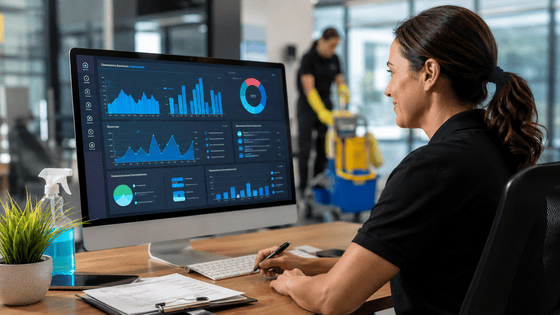
Use reporting dashboards to monitor:
- Job completion times.
- Staff productivity.
- Customer satisfaction.
- Revenue performance.
- Recurring maintenance issues.
Good reporting transforms software from a simple admin tool into a strategic business asset.
Why the Right Cleaning Software Matters
The cleaning industry is becoming more competitive, more compliance-focused, and more client-driven every year.
Businesses that rely on disconnected systems and outdated processes often struggle to scale efficiently.
Modern cleaning business software helps companies:
- Improve operational visibility.
- Reduce admin workloads.
- Strengthen compliance.
- Improve customer communication.
- Increase productivity.
- Deliver more consistent service.
Platforms like Cleaners App are designed specifically for field service businesses, helping cleaning companies simplify operations and manage everything from scheduling to CRM in one place.
Start Streamlining Your Cleaning Business
Technology should make your cleaning business easier to run, not harder.
The biggest mistakes usually happen when businesses adopt software without a clear strategy, use too many disconnected tools, or fail to support staff through the transition.
The right system helps create smoother workflows, stronger client relationships, and better long-term growth.
If your current processes feel disorganised, repetitive, or difficult to scale, it may be time to rethink your technology stack.
Ready to avoid costly software mistakes and simplify your operations?
Explore how Cleaners App can help your team manage scheduling, CRM, reporting, compliance, and job tracking from one easy-to-use platform.